All Categories
Featured
Table of Contents
JPMorgan Chase is apparently investing greatly in AI throughout its service (consisting of financing) as infrastructure, seeing it as vital rather than discretionary. Improving analytics platforms is a major investment location.
The Deloitte and Fortune surveys also discuss comprehensive usage of scenario preparation and threat modeling (typically AI-driven) to prepare for shocks. For example, in Asia 54% of CFOs mention geopolitical danger as a top hazard , so many are purchasing systems to simulate "what-if" circumstances for cash flow and currency direct exposure.
Beyond AI, CFOs continue to release "dumb" and "smart" bots for rule-based jobs. Accounts payable, month-end close, reconciliations and compliance checks are progressively automated.
Lots of organizations are moving monetary systems to the cloud. The tech story at JPMorgan explained earlier highlights a $17B global IT spending plan mainly intended at improving facilities . Financing groups likewise are migrating tradition finance and accounting software to cloud platforms. CFOs invest on cloud ERP (e.g. Workday, Oracle Cloud) and consolidated information lakes to break down silos.
Top Lessons for Executing GCC Models Successfully
CFOs evaluate that scaling on cloud assists lower system costs per deal (the JPMorgan method of measuring a "cost per deal" rather of outright spend ), implying long-term savings justify the upfront investment. As finance systems digitize, so do related risks. CFOs are boosting spending on security, governance, and auditing tools.
Partly an expense center, robust security investments prevent potential multi-million-dollar losses from breaches. Likewise, CFOs purchase regulative compliance tools (for tax, reporting standards, ESG information, etc), seeing these as non-negotiable backstops that enable safe investment in other places. The data and automation revolution indicates that finance teams need new abilities.
Can Nearshore Models Mitigate the Global Talent Gap?Another Deloitte finding was that numerous finance departments intend to ; in practice this means increase internal training programs so that existing staff can fill advanced functions. Rather than working with new MBAs at a premium, CFOs are reinvesting cost savings into internal movement and education (e.g. financial planning academy courses, accreditations in information science for finance).
Significantly, CFOs see ecological and social programs through the lens of expense optimization. Instead of simply being a compliance cost, sustainable investments are expected to yield monetary returns gradually. According to PwC research pointed out by a CFO commentator, distributed energy effectiveness projects (like modern cooling) can cut energy expenses by .
In feasible cases, government incentives (e.g. for EV charging infrastructure) are turning ESG projects into successful financial investments. Hence, investing in green innovations is typically counted as both a future-facing technique and a cost optimization move.

International Talent Acquisition Shifts for Scalable Growth
As BCG notes, successful CFO-led improvements demonstrate reliability and end up being designs of efficiency for the entire business . In practice, this means aligning cost-cutting with capability-building: CFOs cut tactical overhead but reallocate those resources towards analytical tools, data integration, and collective platforms. The outcome is a leaner, more nimble finance group that can support service decisions better.
At the same time, growing projections precision (51%) and moneying brand-new development chances (a mentioned priority) included highly. A year earlier, an international "CFO Pulse" survey discovered over 70% of finance managers planning to cut business expenses in 2025 yet a notable minority were increasing R&D/ IT spending plans . Internally, financing groups have reacted: one analysis found 67% of business were actively reducing expenses in mid-2025, while nearly all kept AI budget plans undamaged .
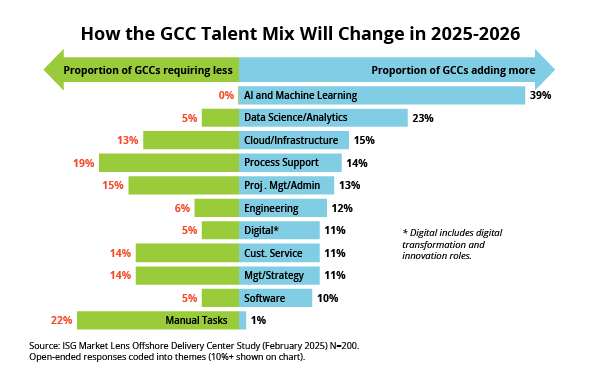
Deloitte's CFO Signals (Jan 2026) suggests of CFOs name digital finance improvement as their # 1 priority , which think now is the correct time to take technological threat . In the very same report, automation and AI metrics are striking: almost 49% of CFOs said automating regular tasks was their top talent objective, and an overwhelming 87% expect AI to be crucial .
Top Tips for Implementing Offshore Frameworks Successfully
SAP Concur research revealed a majority of CFOs planning increased tech spend in 2025 for invest management). In the corporate arena, large companies are certainly budgeting heavily for finance IT JPMorgan, for instance, invested $17B on tech in 2024 and tasks more **. Quantitative outcomes from expense programs highlight the impact.

Latest Posts
How to Coordinate Remote Talent to Growth
Understanding Global Law Shifts On 2026 Strategy
Offshore Vs Nearshore: Analyzing the Best 2026 Approach